India Apartment AC Installation Kit (2026)
A 9-chapter kit you read online or print, with two spreadsheets, for owners and tenants in an Indian apartment who are buying a split AC and want the indoor wall, the outdoor spot, the copper, the drain, the noise and the society’s permission settled before the technician arrives.
- 9chapters
- 21worksheets and tables
- 21checklist items
- 7official sources cited
Checked before every release
- 54automated testsrun at every release: prices, links, pages and data checked before publication.
- 7primary sourcesevery rule and number linked to the official text, for you to open.
- November 4, 2026editionrules and numbers checked on this date, updated when a text changes.
Built from the texts and data of Department of Consumer Affairs (India), Bureau of Energy Efficiency (India).
A split in an Indian flat is installed in a morning, and most of what goes wrong is decided in its first ten minutes: an outdoor unit boxed into a utility balcony that breathes its own hot air, nine metres of copper billed by the foot, a drain that ends on the flat below, a hum in the neighbour’s bedroom, a society that was never asked. This kit gives you those decisions in order, with the figures to measure, the permission to ask for and the sheet to sign with the technician.
Noise limits are quoted from the Noise Pollution (Regulation and Control) Rules, 2000, the placement advice rests on manufacturers’ installation practice and on two published studies of outdoor units in building recesses and shafts (with their DOI), every calculation is shown, and prices are the indicative ranges of our free guide to installation charges. We do not install or sell air conditioners and take no commission from brands, dealers or technicians.
€19
Get the guide, €19Read chapter 1 free- 9 chapters (about 8,600 words): the site walk and the ten decisions, the indoor unit, the outdoor unit, pipe length and copper, condensate and vibration, noise, the society or RWA, installation day, three letters
- 21 worksheets and reference tables, including the site walk, the five outdoor spots judged, the copper cost check, the noise estimate with three worked examples, the application checklist and the sign-off sheet
- Two spreadsheets (CSV: Excel, Google Sheets): noise level at the neighbour’s window, installation quote comparison
Instant access: right after payment your guide opens in your browser; print it or save it as a PDF. €19, paid once, no subscription.
As described, or refunded in full · written into our terms of sale
Secure checkout by Stripe (card, Apple Pay, Google Pay), one-time payment with no subscription, instant access. Refund policy
What you get
- The site walk and the ten decisions: what to have in hand, what to measure with a tape, and when installation day is the wrong day.
- The indoor unit: the four constraints, height and clearances, which wall to choose, the sensor, and the core hole.
- The outdoor unit: balcony, AC ledge, façade bracket, closed balcony or shaft judged, recirculation, clearances, bracket and wall, coast and dust, safety at height.
- Pipe length and the copper: the manual’s figures to copy, why short wins, insulation, flares, the vacuum, and the extra copper calculated in rupees.
- The condensate and the vibration: where the water may go, the condensate pump, pads, a rigid fixing and pipes off the structure.
- Noise: what the dB(A) on the datasheet means, four rules of decibel arithmetic, a method to estimate the level at the neighbour’s window with three worked examples, and the 55 / 45 dB(A) residential limits.
- The society or RWA: who must say yes, what societies regulate, the application checklist and what to do if the committee refuses.
- Installation day: a 16-line sign-off sheet to sign with the technician, the temperature test, then three letters (to the society, for a written quote, after a faulty installation).
Free guides or the printable guide
The free articles answer one question at a time. The guide puts it all in order and gives you the tools to act.
Free guides
€0
57 free articles
- ✓The rules explained, official sources cited
- —The decisions in order, from diagnosis to action
- —21 worksheets and tables to fill in
- —2 spreadsheets ready to fill in
- —Print it or keep it as a PDF
India AC installation kit
€19
VAT included, paid once
- ✓The rules explained, official sources cited
- ✓The decisions in order, from diagnosis to action
- ✓21 worksheets and tables to fill in
- ✓2 spreadsheets ready to fill in
- ✓Print it or keep it as a PDF
As described, or refunded in full
Who it is for
- Owners and tenants in an Indian apartment who are buying a split AC, or have one delivered, and want the installation decided before the technician arrives rather than on the morning itself
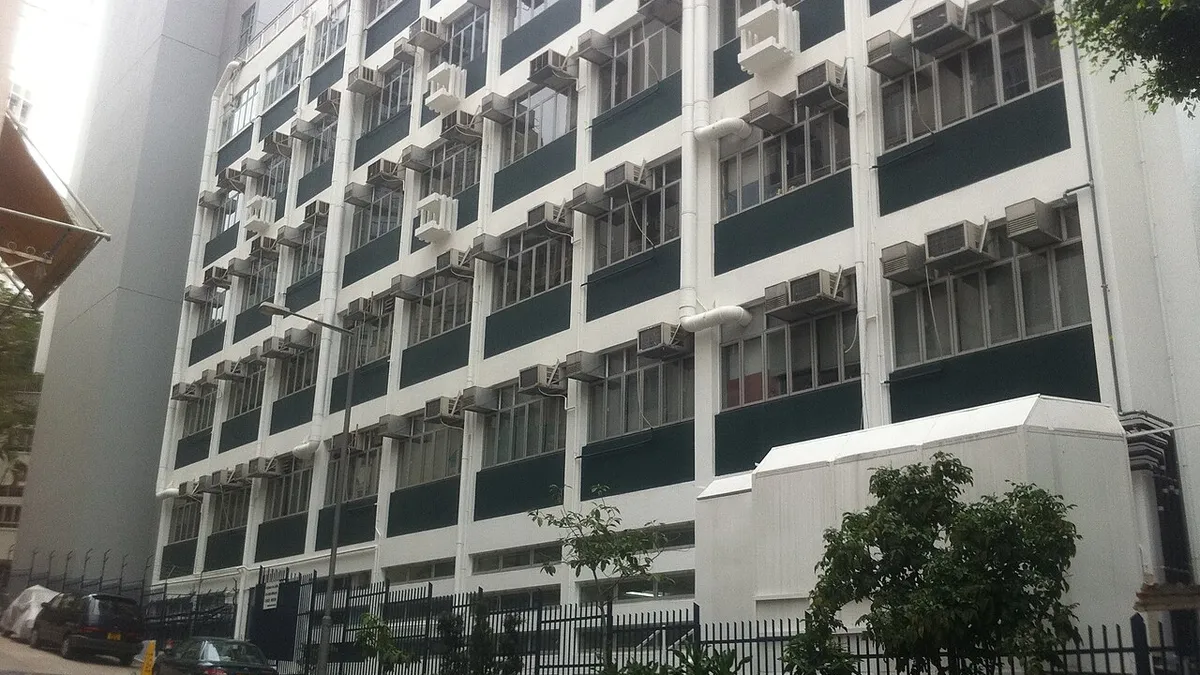
- Anyone whose only outdoor spot is a closed balcony, a service shaft or a façade wall, or whose society or neighbour has raised noise, dripping or the look of the building
- Anyone preparing a written application to the managing committee or RWA, or comparing installation quotes with extra copper, a stand and core cutting on them
Contents
- Before the technician comes: the site walk and the ten decisions free below
- The indoor unit: wall, height, throw and the drain
- The outdoor unit: balcony, AC ledge, shaft or façade
- Pipe length, height difference and the copper
- The condensate and the vibration
- Noise: reading the dB(A) and protecting the neighbour
- The society or RWA permission
- Installation day: the sign-off sheet
- Three letters
In the paid chapters: 16 checkpoints to tick, and 21 worksheets or tables across the guide, each based on the rule or data it cites.
Introduction
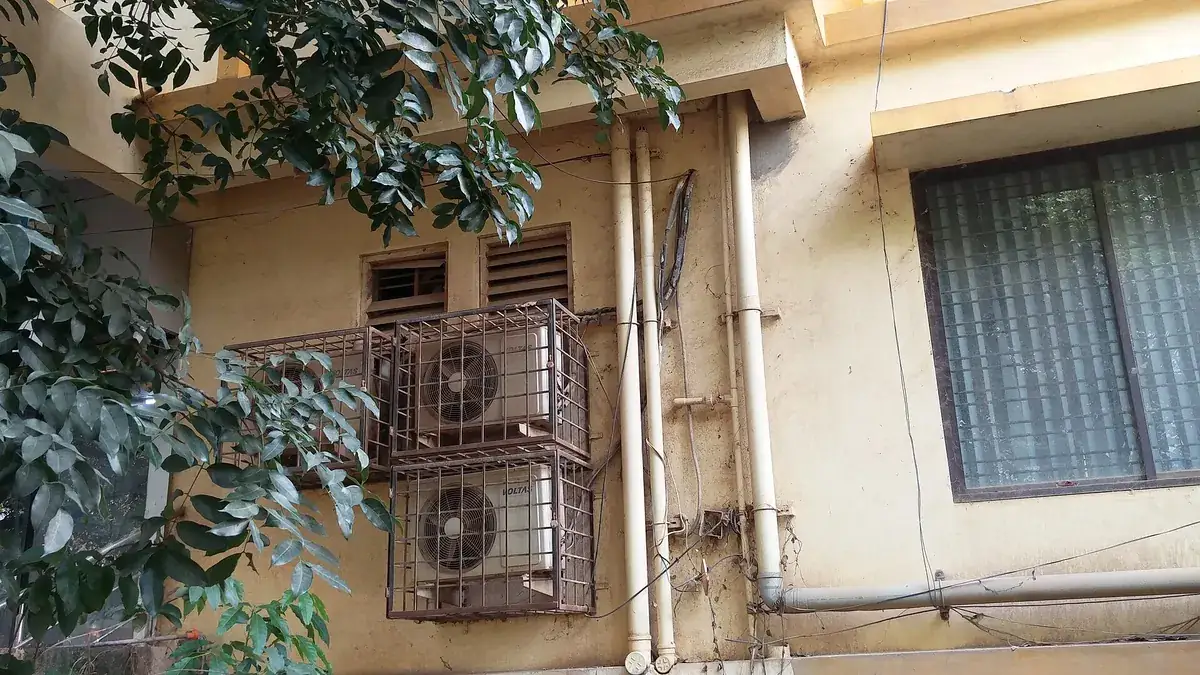
Installing a split air conditioner in an Indian flat takes a technician two to four hours. The decisions that matter take ten minutes, and they are usually taken by nobody: the indoor unit goes on whichever wall has the fewest obstacles, the outdoor unit goes on the only ledge the ladder reaches, the copper is cut to whatever the route needs, and the drain ends where gravity happens to take it. The bill arrives with extra feet of pipe, a stand and a second core hole. The rest arrives later: a machine that never quite cools in May because its outdoor unit breathes its own exhaust, water on the wall in July, a hum in the neighbour's bedroom, and a letter from the society about dripping on the cars.
This kit puts those ten minutes back in order, before the drill comes out. It tells you which wall and which outdoor spot to choose and why, how long the copper may be and what each extra metre costs in rupees and in capacity, where the water must go, how to stop the vibration reaching the walls, how to read the noise figure on the datasheet and estimate what your neighbour will hear, how to get the society's permission in writing, and what to check and sign with the technician on the day. It ends with three letters: to the society, to the dealer for a written installation quote, and to the installer or brand when the job was not done right.
How to use it: chapter 1 is the site walk and the ten decisions; do it with a tape measure, before you confirm the delivery date. Chapters 2 and 3 place the two units. Chapter 4 is the copper. Chapter 5 is the water and the vibration. Chapter 6 is noise. Chapter 7 is the society or RWA. Chapter 8 is the sign-off sheet for installation day. Chapter 9 holds the three letters. Print it (Ctrl+P or Cmd+P, then "Save as PDF", or print on paper). The noise estimate and the installation quote comparison are also on your access page as spreadsheets.
The legal references are quoted from their texts: the Noise Pollution (Regulation and Control) Rules, 2000 published by the Central Pollution Control Board, the Consumer Protection Act, 2019 and the Model Tenancy Act, 2021. The placement advice rests on manufacturers' installation practice and on two published studies of outdoor units in building recesses and shafts, cited with their DOI. Prices are the indicative ranges of our free guide to installation charges in India: they help you spot an outlier, they are not a tariff, and your city, your floor, your brand and the month of May all move them.
Chapter 1: Before the technician comes: the site walk and the ten decisions
The installer who arrives with the delivery has one aim: finish the job and reach the next address. Everything you have not decided before he arrives, he will decide for you, in the way that is quickest for him. That is not malice; it is a day with six installations in it. The answer is to arrive at the morning with the decisions taken and written down.
The ten decisions
| # | Decision | Decided by | Where in this kit |
|---|---|---|---|
| 1 | Which wall the indoor unit goes on, and at what height | You, with the drain route in mind | Chapter 2 |
| 2 | Which way the air is thrown (along the room, never at the bed) | You | Chapter 2 |
| 3 | Where the outdoor unit goes, and on what (bracket, stand, ledge) | You and the society | Chapter 3 |
| 4 | Whether that spot gives the clearances in the manual | Tape measure and manual | Chapter 3 |
| 5 | The copper route and its real length, and the height difference | Tape measure and manual | Chapter 4 |
| 6 | Where the condensate ends up, outside your flat | You and the society | Chapter 5 |
| 7 | What stops the vibration reaching the structure | You, at the quote | Chapter 5 |
| 8 | What the neighbour nearest the outdoor unit will hear at night | Datasheet and a calculation | Chapter 6 |
| 9 | Who must give permission, and in writing | Owner, society or RWA | Chapter 7 |
| 10 | What the technician will check and sign before he leaves | You, with the sign-off sheet | Chapter 8 |
What to have in hand
- The exact model number of the indoor and outdoor units (on the invoice or the dealer's quote, not just "1.5 ton 5 star").
- The installation manual for that model. Most brands publish it on their website; ask the dealer for the PDF before delivery if it is not in the box yet. You need four pages of it: clearances, maximum pipe length and height difference, extra refrigerant per metre, and the electrical requirements.
- The datasheet with the noise figures (indoor at low and high fan, outdoor).
- Your society's rules on air conditioners, if they exist in writing (bye-laws, circular, notice board), or the name of the committee member who deals with it.
- A tape measure of at least 5 m, and your phone for photos.
The site walk (fill in)
Walk it once, alone, with the tape measure. Then walk it again with the technician, before he unpacks.
| Item | What you measured or found | OK? |
|---|---|---|
| Room: length × width × ceiling height (m) | ||
| Wall chosen for the indoor unit; is it an outside wall? | ||
| Free height above the planned unit position (cm), loft or curtain box nearby? | ||
| Outdoor spot chosen (balcony, AC ledge, shaft, façade, terrace) | ||
| Free air in front of the outdoor unit's fan (m) | ||
| Free air behind the coil and at the sides (cm) | ||
| What the outdoor unit faces (open air, a wall at … m, a neighbour's window at … m) | ||
| Copper route measured along the wall, not in a straight line (m) | ||
| Height difference between the two units (m), outdoor unit above or below? | ||
| Where the drain hose will end, and what is under it | ||
| Wall material at the bracket (RCC, solid brick, hollow block, cladding) | ||
| Dedicated socket or point of the right rating near the indoor unit? Earth? | ||
| Can a technician reach the outdoor unit later without a ladder on a parapet? | ||
| Permission needed from: owner / society / RWA / builder under maintenance |
Three rules that settle most arguments in advance
The manual governs. Clearances, pipe length, height difference and the electrical supply are printed in the installation manual of your model, and they vary between models. A technician who says "it doesn't matter" about a figure in the manual is telling you he will not be the one living with the consequences. Every rule of thumb in this kit gives way to the manual.
Decide outside first. The outdoor unit has the fewest acceptable spots, the society has a say in it, and it decides the pipe length. Choose its spot first, then the indoor wall nearest to it that also works inside the room, then measure the copper between them. Doing it the other way round is how flats end up with nine metres of pipe across a bedroom.
Write the extras before the drill. Ask for the brand's rate card and a written figure for every chargeable item (extra copper per foot, stand, core cutting, dedicated point, drain extension) before work starts. Once the hole is drilled, the negotiation is over. Chapter 9 has a letter that asks for this in writing when you book.
When installation day is the wrong day
Installation can wait a week; a wrong hole cannot be undone. Postpone if:
- the society has not answered and the outdoor unit would go on a common wall or over a shaft (chapter 7);
- the only outdoor spot fails the clearances in the manual and nobody has proposed a better one (chapter 3);
- the copper route exceeds the manual's maximum length or height difference (chapter 4);
- there is no dedicated point of the right rating and no electrician has been booked (chapter 8);
- the technician has no vacuum pump (chapter 4).
Checkout by Stripe
Card, Apple Pay or Google Pay on Stripe’s secure page. Your card details never pass through our servers.
Instant access
Your guide opens right after payment, ready to save as a PDF. Receipt by email; “Find my purchases” resends the link.
VAT included, paid once
The price shown is the total. No subscription, nothing charged later.
Sources you can check
7 official sources cited in this guide. We install nothing and sell no equipment. Terms of sale.
Frequently asked questions
How do I receive the guide?
Right after payment you are taken to your guide page, with the spreadsheet to download. Bookmark it: the link stays valid and always shows the latest version. To keep a PDF, save it from your browser (Ctrl+P or Cmd+P, then "Save as PDF"): the layout is made for printing. Stripe emails you the receipt, and "Find my purchases" at the bottom of every page sends the link again.
Is VAT included? Is it a subscription?
€19 is the total you pay, VAT included, once. There is no subscription and nothing is charged later. Your card details go to Stripe and never reach us.
Why is the price in euros?
The kit is sold by a French company through Stripe and charged in euros: the price shown is the total, paid once. Your bank converts it to rupees at its own rate and may add a foreign-transaction fee. Your card must be enabled for international online payments.
I already have the India buying pack or the service handbook. Is this the same?
No. The buying pack covers choosing the AC, the tonnage, the label and your bill, with an installation checklist. The service handbook starts after the installation: faults, gas, AMC, shifting. This kit is the installation itself, in a flat: both units’ positions, the copper, the drain, the vibration, the noise at the neighbour’s window and the society’s permission.
Can I use it if I rent the flat?
Yes. Chapter 7 starts with the owner’s written consent, and the application to the society names you as the tenant. Who removes the AC and makes good the wall when you leave belongs in the agreement; our free guide to an AC in a rented flat covers it.
Does it tell me which brand is quietest?
No. We sell no equipment and take no commission. The kit shows you how to read the noise figure on any datasheet and estimate what it means at a given window, so you can compare the models you are offered yourself.
What is the guarantee?
The guide is guaranteed as described: if it does not open or contains an error, we fix it, and if we cannot, we refund you in full (refund policy in the terms of sale). Write to admin@tech-bharat.com. A duplicate payment is always refunded.
Free guides on the same topic
- A noisy air conditioner in an Indian flat: causes, limits and fixes
- Where the outdoor unit goes: placement, piping and the cooling you lose
- Where the indoor unit goes: height, wall and the drain that decides everything
- What installing a split AC in India actually costs
All printable guides and packs
€19 is the total you pay, VAT included: nothing is added at checkout. Payment by Stripe; your statement shows “CLAUDE AC”. See our terms of sale, which include our refund policy. Access is immediate after payment. Claude AC is an information publisher; the guide is not legal, engineering or financial advice.