Air conditioning in Austria: is it common?
Air conditioning is still rare in Austrian homes, but the need is growing fast. Space cooling was 0.09% of household energy use in 2024 (EU: 0.84%, Eurostat). Austria averaged 29.9 cooling degree days a year over 2016–2025, about a quarter of the EU average (111.6) but almost six times its 1980s level (5.2).
Before the purchase, the national context for Austria: Vienna’s Pannonian summers are Budapest’s, not Munich’s — the city now counts more hot days than many Italian cities counted in the 1980s, with a rental stock hard to retrofit.
| Typical July highs | ≈ 27 °C (main cities) |
|---|---|
| Summer profile | warm |
| AC ownership | around one household in ten, concentrated in Vienna and the eastern lowlands |
| Recent heat events | the 40.5 °C national record of 2013, and Vienna’s tally of 30 °C+ days roughly doubling within a generation |
| Local framework | rental law makes retrofits landlord-dependent; Vienna’s urban heat programme funds greening as the first-line answer |
| Cooling degree days (Eurostat) | 29.9 a year on average in 2016–2025 (EU: 111.6); 25.38 in 2025 |
| Cooling in household energy (2024) | 0.09% (EU: 0.84%) |
What summers in Austria now look like
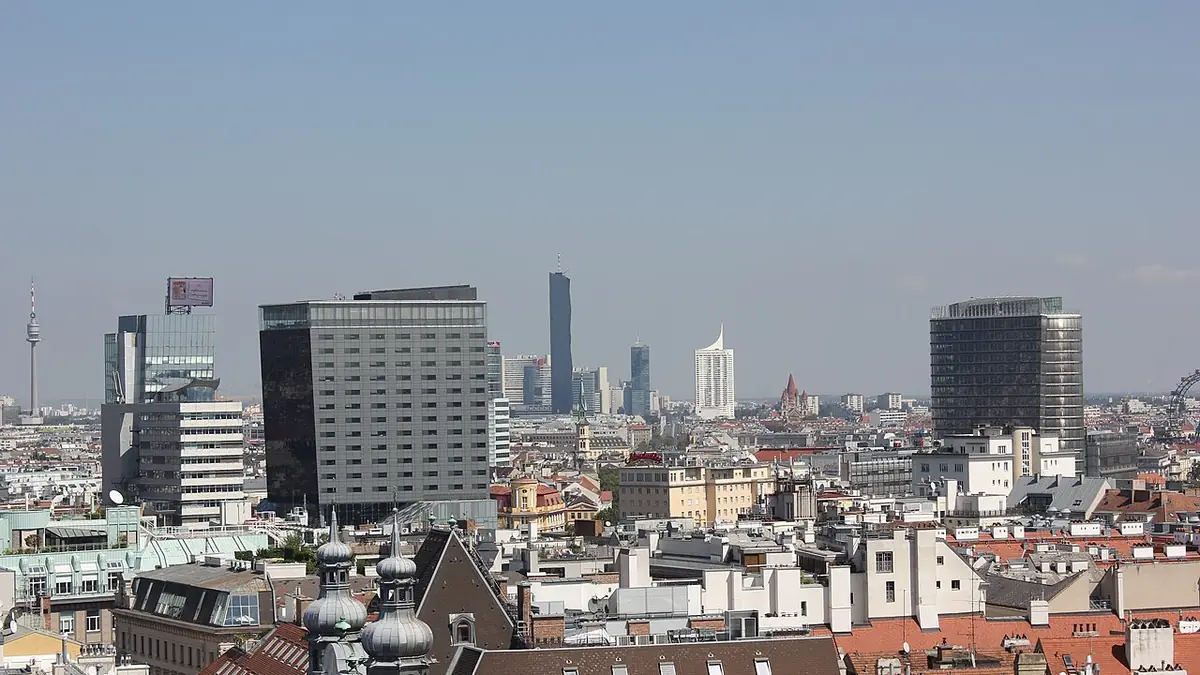
Austria’s summers are warm — July highs around 27 °C — and getting hotter, as the 40.5 °C national record of 2013, and Vienna’s tally of 30 °C+ days roughly doubling within a generation showed. Ownership: around one household in ten, concentrated in Vienna and the eastern lowlands. This is the transition zone where reversible air-to-air units make the most sense: real cooling in July, efficient heating for the shoulder seasons and beyond.
The European rules that apply
The common European toolkit applies in Austria: the energy label with its three-zone SCOP map, the F-gas schedule pushing refrigerants toward R-32 and propane, and certified installation as the legal norm. National rules then add permissions and subsidies.
More on the European section: portables, splits, heat pump cooling; sizing on the BTU pages.
Frequently asked questions
Is air conditioning common in Austria?
Not yet in homes: Eurostat puts space cooling at 0.09% of Austrian household energy use in 2024. But cooling degree days averaged 29.9 a year over 2016–2025 against 5.2 in the 1980s, with a peak of 55.6 in 2024, so demand is concentrated in Vienna and the eastern lowlands.
Do I need permission to install air conditioning in Austria?
Usually for fixed units, yes in some form: rental law makes retrofits landlord-dependent; Vienna’s urban heat programme funds greening as the first-line answer. Across Europe, co-ownership consent for façades, heritage-zone rules and night noise limits apply almost everywhere — portables need none of it. See our noise rules guide.
Which type of air conditioner suits Austria best?
For Austria’s warm summers (≈ 27 °C July highs), the ranking is: reversible split for owners, fixed monobloc where façades are protected, portable for tenants without consent. Compare on the portable vs split guide.
Cooling degree days (Eurostat method): a day counts when its mean temperature reaches 24 °C, and then adds its mean minus 21 °C. Figures read from Eurostat on 21 October 2026.
Sources
Compare with similar European markets: France · Hungary · Portugal · Serbia · Slovakia.