Ductless Mini-Split Planner 2026: Zones, Sizing, Cold-Climate Heat, Quotes and Install
A 10-chapter planner you read online or print, with a sizing and quote spreadsheet, for US homeowners planning a ductless mini-split for one room, an addition or the whole house.
- 10chapters
- 13worksheets and tables
- 50checklist items
- 9official sources cited
Checked before every release
- 54automated testsrun at every release: prices, links, pages and data checked before publication.
- 9primary sourcesevery rule and number linked to the official text, for you to open.
- October 31, 2026editionrules and numbers checked on this date, updated when a text changes.
Built from the texts and data of U.S. Department of Energy, ENERGY STAR, EPA, Code of Federal Regulations, ACCA, IRS.
A mini-split is the most flexible way to cool and heat an American house, and the system most often sold in the wrong size and the wrong layout, because the decisions that matter are made in the first conversation and rarely written down. This planner puts them in order, from the rooms that get a head to the day the system is commissioned.
Every rule is quoted from its source (DOE standards in 10 CFR 430.32, EPA Section 608 and the Technology Transitions rule, the IRS on the end of the 25C credit, the Home Energy Rebate statute, ENERGY STAR, ACCA, AHRI and NEEP data) and every price is a market range labeled as such. We install nothing, sell no equipment and take no commission: the planner is on your side.
$29
Get the guide, $29Read chapter 1 free- 10 chapters (about 4,400 words): fit, sizing, layout, winter heat, ratings and rules, placement, DIY gates, quotes and rebates, commissioning, your planner
- 13 worksheets and reference tables, including the zone sizing sheet, the multi-zone combination check, the winter capacity check and a three-quote comparison
- One spreadsheet (CSV: Excel, Numbers, Google Sheets): zone sizing with the ENERGY STAR corrections, and your quotes side by side
Instant access: right after payment your guide opens in your browser; print it or save it as a PDF. $29, paid once, no subscription.
As described, or refunded in full · written into our terms of sale
Secure checkout by Stripe (card, Apple Pay, Google Pay), one-time payment with no subscription, instant access. Refund policy
What you get
- Is ductless right for your house: the house-by-house answer, what ductless does well and less well, and the first five questions.
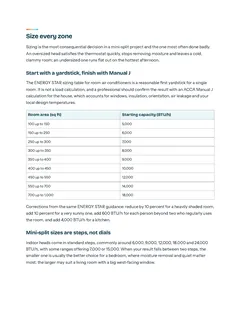
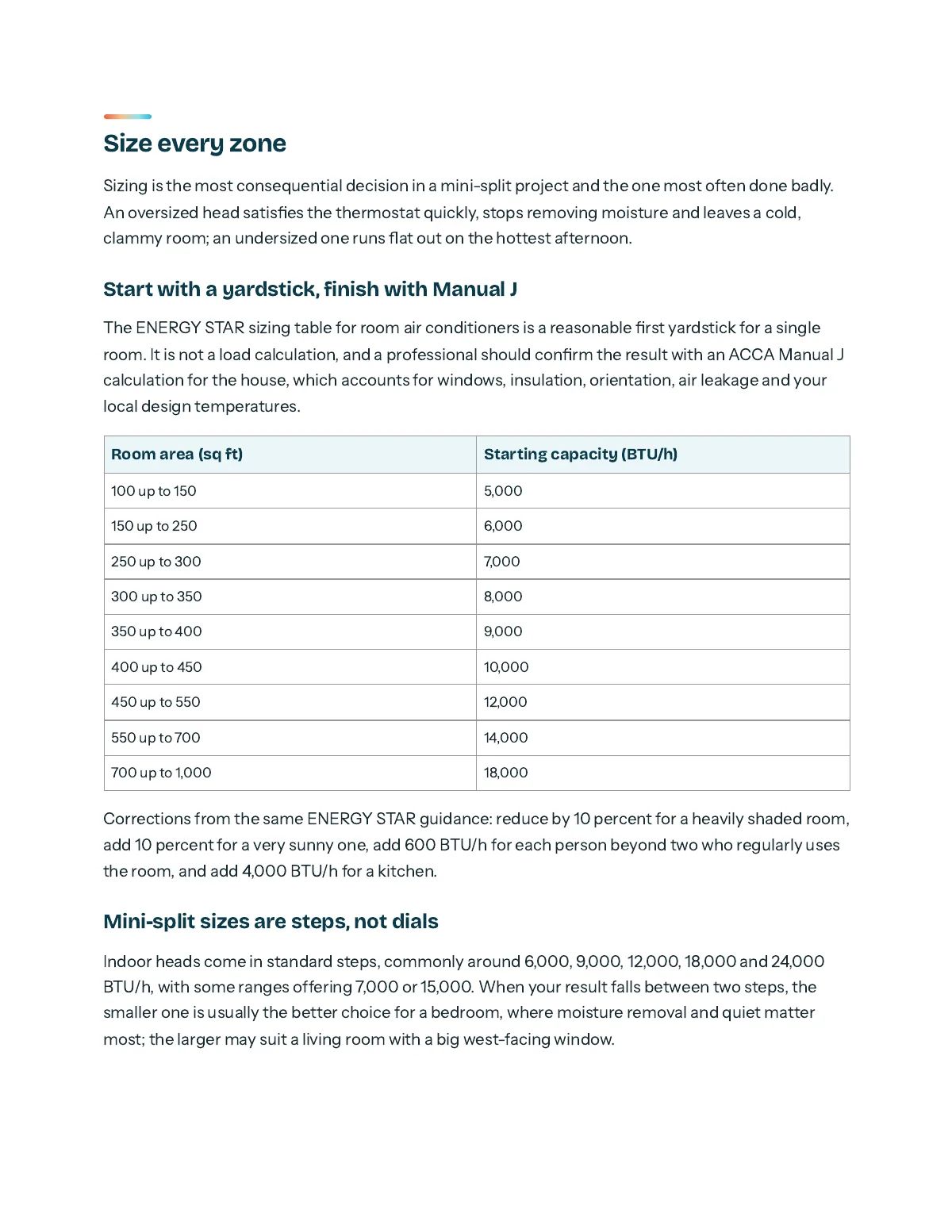
- Zone-by-zone sizing: the ENERGY STAR yardstick and its corrections, head size steps, minimum output and when heating sets the size.
- Single-zone, multi-zone or ducted: why several singles often win, and how to read a multi-zone combination.
- Heating in winter: capacity and COP at 17 °F and 5 °F from the AHRI and NEEP data, defrost, snow and backup heat.
- Ratings and rules: SEER2, EER2 and HSPF2 minimums, the A2L refrigerant transition, Section 608 and the end of 25C.
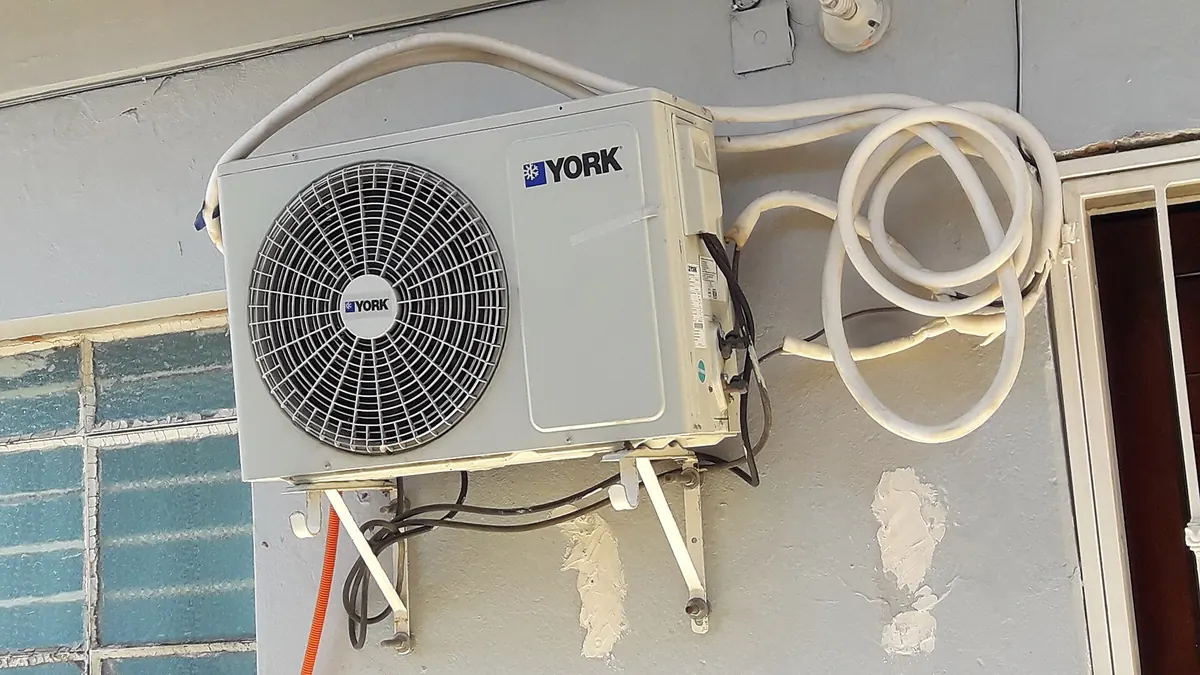
- Where everything goes: the indoor head, the outdoor unit, the line set, the condensate and the circuit.
- Pro, DIY kit or hybrid: the three gates of federal law, local permits and the warranty.
- Quotes and rebates, then commissioning, registration, the cleaning schedule and your one-page planner.
Free guides or the printable guide
The free articles answer one question at a time. The guide puts it all in order and gives you the tools to act.
Free guides
$0
59 free articles
- ✓The rules explained, official sources cited
- —The decisions in order, from diagnosis to action
- —13 worksheets and tables to fill in
- —A spreadsheet ready to fill in
- —Print it or keep it as a PDF
Mini-split planner
$29
paid once
- ✓The rules explained, official sources cited
- ✓The decisions in order, from diagnosis to action
- ✓13 worksheets and tables to fill in
- ✓A spreadsheet ready to fill in
- ✓Print it or keep it as a PDF
As described, or refunded in full

Who it is for
- US homeowners planning a ductless mini-split for one room, an addition, a finished attic or the whole house, who want to know what to ask for before the first contractor visit
- Owners with two or three mini-split quotes that disagree on the number of zones, the size of each head or the outdoor unit, and who want to compare them line by line
- People weighing a DIY pre-charged kit against a professional install, who want the legal, technical and warranty limits in one place
Contents
- Is ductless the right answer for your house? free below
- Size every zone
- Single-zone, multi-zone or ducted mini-split
- Heating with a mini-split
- Ratings, federal rules and refrigerant
- Where everything goes
- Professional, DIY kit or both: the three gates
- Quotes, money and rebates
- Commissioning and the first year
- Your planner
In the paid chapters: 45 checkpoints to tick, and 13 worksheets or tables across the guide, each based on the rule or data it cites.
Introduction
A ductless mini-split is the most flexible way to cool and heat an American house: a quiet head in each room that needs it, one or more outdoor units, and no ducts. It is also the system most often sold in the wrong size and the wrong layout, because the decisions that matter are made in the first conversation and rarely written down. This planner puts those decisions in order: which rooms get a head, how big each one should be, how many outdoor units, whether it will heat in January, where everything goes, and how to tell a good quote from a bad one.
How to use it: chapter 1 tells you whether ductless is the right answer for your house. Chapter 2 sizes each zone. Chapter 3 chooses between single-zone, multi-zone and ducted mini-splits. Chapter 4 covers winter heating, chapter 5 the efficiency ratings and federal rules, chapter 6 where every component goes. Chapter 7 sets out the three gates of a DIY install, chapter 8 reads quotes and rebates, chapter 9 covers commissioning and the first year. Chapter 10 is the planner worksheet. Print it (Ctrl+P or Cmd+P, then "Save as PDF"): the worksheets are made to fill in by hand, and the spreadsheet does the arithmetic.
Rules are those in force in October 2026, with their source: DOE energy conservation standards for central air conditioners and heat pumps (10 CFR 430.32(c), SEER2, EER2 and HSPF2 since January 1, 2023), EPA Clean Air Act Section 608 (refrigerant handling and technician certification), EPA Technology Transitions rule (700 GWP limit for new residential systems from January 1, 2025), the end of the federal 25C credit for property placed in service after December 31, 2025, and the state-run Home Energy Rebate programs (42 U.S.C. 18795a).
Chapter 1: Is ductless the right answer for your house?
The house usually makes this decision before you do. Ducts that exist and work favor central equipment; ducts that never existed favor ductless. The interesting cases are in between.
| Your house | Most likely answer | What could change it |
|---|---|---|
| No ducts at all (hot-water radiators, baseboard, older house) | Ductless, one head per main room | A gut renovation that can hide short duct runs: consider a ducted mini-split air handler |
| Good ducts, central system at the end of its life | Central replacement, often a heat pump | Rooms the ducts never served well: add a single-zone head there |
| One room the central system never reaches (finished attic, sunroom, garage office, addition) | Single-zone mini-split for that room | Nothing; this is the classic case |
| Leaky ducts in an unconditioned attic, house heated by resistance or oil | Ductless for the main rooms, retire the worst duct runs | A duct-sealing and insulation job may make central worth keeping |
| Apartment or condo with no outdoor space for a condenser | Check the building's rules first | Wall-mounted outdoor unit, roof or balcony permission |
What ductless does well
- Real room-by-room control: each head has its own setpoint, so a bedroom can sit at 70 °F while an empty office is off.
- No duct losses: ENERGY STAR notes that typical duct systems lose a significant share of the air they move, often in the 20 to 30 percent range; a ductless head delivers its air in the room.
- Inverter compressors that modulate instead of cycling, which helps comfort and humidity.
- Heating included: almost every residential mini-split sold today is a heat pump.
- Installation measured in days, with a three-inch hole per head instead of new ductwork.
What it does less well
- Visible heads on the wall, unless you choose floor consoles, ceiling cassettes or concealed-duct units.
- Light filtration: the heads carry washable mesh screens, not the deep media filter a central return can hold. For serious filtration, plan on standalone HEPA units.
- Cost per head adds up on a whole-house job.
- Doors closed means no air: a head conditions the room it is in, and very little beyond.
The first five questions
- Which rooms need cooling, which need heating, and at what times of day?
- Do you have working ducts, and do you want to keep them?
- Where can an outdoor unit go: ground, wall bracket, roof?
- Is the mini-split meant to be the main heat source, or a supplement?
- Are you open to a DIY kit for a low-stakes room, or is this a professional job throughout?
Write the answers in the planner in chapter 10.
Checkout by Stripe
Card, Apple Pay or Google Pay on Stripe’s secure page. Your card details never pass through our servers.
Instant access
Your guide opens right after payment, ready to save as a PDF. Receipt by email; “Find my purchases” resends the link.
One price, paid once
The price shown is the total, in US dollars. No subscription, nothing charged later.
Sources you can check
9 official sources cited in this guide. We install nothing and sell no equipment. Terms of sale.
Frequently asked questions
How do I receive the guide?
Right after payment you are taken to your guide page, with the spreadsheet to download. Bookmark it: the link stays valid and always shows the latest version. To keep a PDF, save it from your browser (Ctrl+P or Cmd+P, then "Save as PDF"): the layout is made for printing. Stripe emails you the receipt, and "Find my purchases" at the bottom of every page sends the link again.
Is it a subscription? Is anything added at checkout?
$29 is the total you pay, once. There is no subscription and nothing is charged later. Your card details go to Stripe and never reach us.
Does the planner recommend a brand or a DIY kit?
No. We sell no equipment and take no commission. It shows you how to size each zone, read any manufacturer's data and compare any quotes, and it sets out the legal, permit and warranty limits of a DIY kit so you can decide.
I have the Owner's Handbook. Is this the same?
No. The Owner's Handbook covers maintaining and troubleshooting any central system, heat pump or mini-split you already have. This planner is about choosing and installing a ductless system: zones, sizes, layout, winter capacity, placement, DIY limits and quotes.
What is the guarantee?
The guide is guaranteed as described: if it does not open or contains an error, we fix it, and if we cannot, we refund you in full (refund policy in the terms of sale). Write to admin@tech-bharat.com. A duplicate payment is always refunded.
Free guides on the same topic
- Ductless mini-splits: room-by-room comfort without ducts
- Mini-split vs central air: which architecture fits your house
- Installing a mini-split yourself: what the law, the tools and the warranty allow
- Do heat pumps work in the cold? Reading capacity, not marketing
- Mini-split sizing: BTU per room and per zone, without oversizing
All printable guides and packs
$29 is the total you pay, charged in US dollars: nothing is added at checkout. Payment by Stripe; your statement shows “CLAUDE AC”. See our terms of sale, which include our refund policy. Access is immediate after payment. Claude AC is an information publisher; the guide is not legal, engineering or financial advice.