Cooling a Flat Without an Outdoor Unit: The European Guide (2026)
A 9-chapter guide you read online or print, with a comparison spreadsheet, for owners and tenants of flats in Europe who cannot have, or are refused, an outdoor unit.
- 9chapters
- 16worksheets and tables
- 15checklist items
- 16official sources cited
Checked before every release
- 54automated testsrun at every release: prices, links, pages and data checked before publication.
- 16primary sourcesevery rule and number linked to the official text, for you to open.
- October 28, 2026editionrules and numbers checked on this date, updated when a text changes.
Built from the texts and data of Service-public.fr, Commission européenne (Eurostat), EUR-Lex, BOE, GOV.UK.
When the building, the landlord or the heritage officer says no to an outdoor unit, four options remain: a wall monobloc through two holes, a portable with one or two hoses, a portable sealed into the window, and a split whose condenser is hidden somewhere acceptable. They differ in capacity, noise and running cost, and each needs a different yes. This guide gives you the real figures and the rules where you live.
Every figure is official and dated (the EU product register EPREL read on October 28, 2026, Regulations 626/2011 and 206/2012, Eurostat electricity prices) and every national rule names its text, from the Town and Country Planning Act to the Spanish Ley de Propiedad Horizontal, so you can check it. We do not install, sell air conditioners or recommend installers: the guide is on your side.
€29
Get the guide, €29Read chapter 1 free- 9 chapters (about 9,600 words): the four options, what the EU register says, the cost of a summer, the rules in 10 countries, getting a yes, five letters, core holes and condensate, noise, the decision
- 16 worksheets and reference tables, including capacity, sound and label class of every category from the EU register, running costs in 10 countries and a consent tracker
- One spreadsheet (CSV: Excel, Numbers, Google Sheets): your options compared, with the cost of a summer
Instant access: right after payment your guide opens in your browser; print it or save it as a PDF. €29, paid once, no subscription.
As described, or refunded in full · written into our terms of sale
Secure checkout by Stripe (card, Apple Pay, Google Pay), one-time payment with no subscription, instant access. Refund policy
What you get
- The four options side by side, with what each asks of the building, and the decision in six questions.
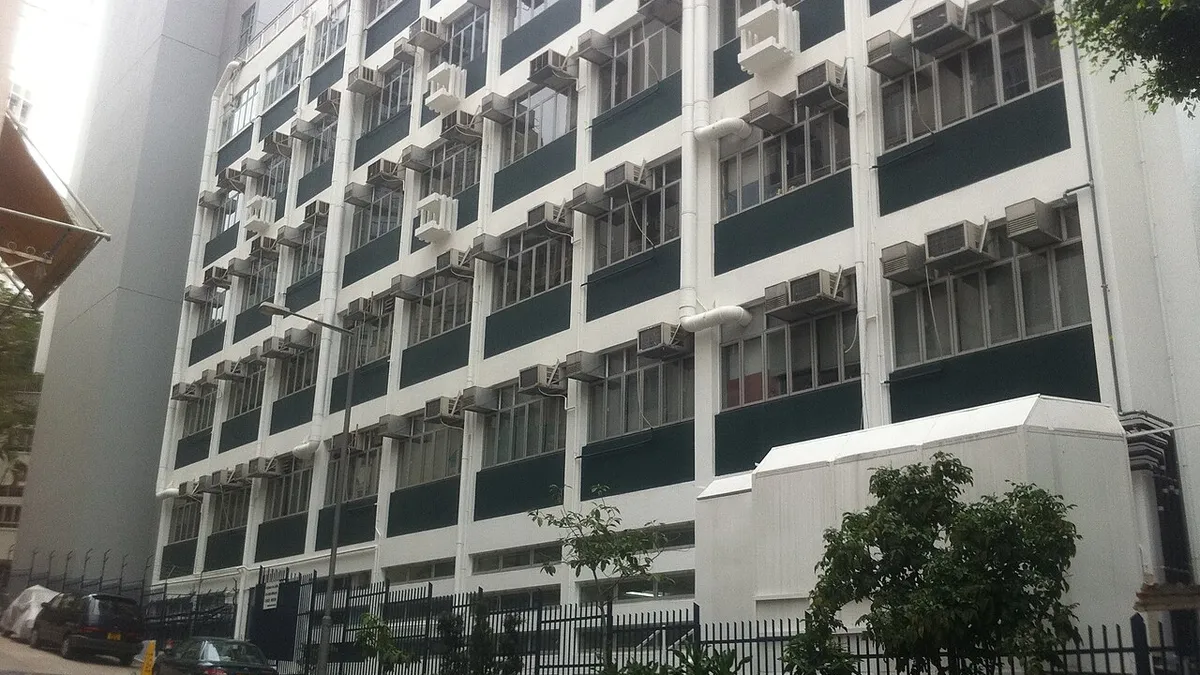
- What the EU register says: capacity, efficiency, indoor sound power and label class of 204 double-duct, 1,878 single-duct and 4,354 split models, and how to look up any model yourself.
- The cost of a summer for a monobloc, a portable and a hidden split, at Eurostat prices in 10 countries, and your own calculation.
- The rules in 10 countries (England, Ireland, France, Belgium, the Netherlands, Germany, Austria, Italy, Spain, Portugal): planning, heritage, the building and the landlord, each from its official text.
- Getting a yes: what a landlord or a building can refuse, the arguments that move a vote, and a consent tracker.
- Five request letters: to the landlord, the building manager, the freeholder, the municipality, and after a refusal.
- Core holes, grilles and condensate, sealing a portable, and the questions for the installer.
- Noise: what the fiche tells you, the limits your neighbours can invoke, and the comparison worksheet for your decision.
Free guides or the printable guide
The free articles answer one question at a time. The guide puts it all in order and gives you the tools to act.
Free guides
€0
56 free articles
- ✓The rules explained, official sources cited
- —The decisions in order, from diagnosis to action
- —16 worksheets and tables to fill in
- —A spreadsheet ready to fill in
- —Print it or keep it as a PDF
No outdoor unit guide
€29
VAT included, paid once
- ✓The rules explained, official sources cited
- ✓The decisions in order, from diagnosis to action
- ✓16 worksheets and tables to fill in
- ✓A spreadsheet ready to fill in
- ✓Print it or keep it as a PDF
As described, or refunded in full
Who it is for
- Owners and tenants of flats in Europe (including the UK and Ireland) whose building, landlord or heritage rules refuse an outdoor unit, or who have nowhere to put one
- Anyone choosing between a wall monobloc with two holes, a single or dual hose portable, a portable sealed into a window and a split with a hidden condenser, who wants real figures rather than brochure adjectives
- Anyone who has to write to a landlord, a freeholder, a building manager or a town hall and wants the request to be complete the first time
Contents
- The four ways to cool a flat without an outdoor unit free below
- What the EU register says: kW, sound and label class
- What a summer costs: monobloc, portable or hidden split
- Façade and heritage rules in 10 European countries
- Getting a yes from the landlord and the building
- Five request letters
- Core holes, grilles and condensate: doing the work right
- Noise: your neighbours and your own bedroom
- Your comparison worksheet and decision
In the paid chapters: 10 checkpoints to tick, and 16 worksheets or tables across the guide, each based on the rule or data it cites.
Introduction
In most of urban Europe the obstacle to cooling a flat is not the machine but the wall it would hang on. The façade belongs to the building, the building has rules, the landlord has a lease, and in a historic centre the municipality has an opinion too. When the outdoor unit of a split system is refused, or there is simply nowhere to put it, four options remain: a wall monobloc that breathes through two holes, a portable with one or two hoses, a portable sealed properly into a window, and a split whose condenser is hidden somewhere the building will accept.
This guide compares the four with the figures manufacturers must declare in the EU product register (EPREL), then walks you through the permission side in ten European countries, with every rule taken from its official text. It ends with the practical work (core holes, grilles, condensate, noise) and with five request letters and a comparison worksheet you can fill in.
How to use it: read chapter 1 to see which options are open to you. Chapters 2 and 3 compare them on capacity, sound and running cost. Chapter 4 gives the rules for your country, and chapter 5 shows how to get a yes from the landlord and the building. Chapter 6 holds the five letters. Chapters 7 and 8 are for when the decision is made: the installation and the neighbours. Chapter 9 is the decision worksheet. Print it (Ctrl+P or Cmd+P, then "Save as PDF", or print on paper). The comparison worksheet is also on your access page as a spreadsheet.
The figures are official and dated: every air conditioner placed on the EU market must be registered in EPREL with its declared capacity, efficiency, sound power and energy class; we read all 28,342 air conditioner registrations listed in the public register on October 28, 2026, and kept the models with no end-of-market date. The label classes and minimum efficiencies come from Commission Delegated Regulation (EU) No 626/2011 and Commission Regulation (EU) No 206/2012. Electricity prices are Eurostat's household prices for the second half of 2025. Every national rule names its text: an act, a code article, a regulation or the government page that applies it.
Chapter 1: The four ways to cool a flat without an outdoor unit
Before comparing figures, be clear about what each option asks of the building, because that is what decides whether it is open to you at all.
The four options, side by side
| Option | What it is | What it asks of the building | Who usually has a say |
|---|---|---|---|
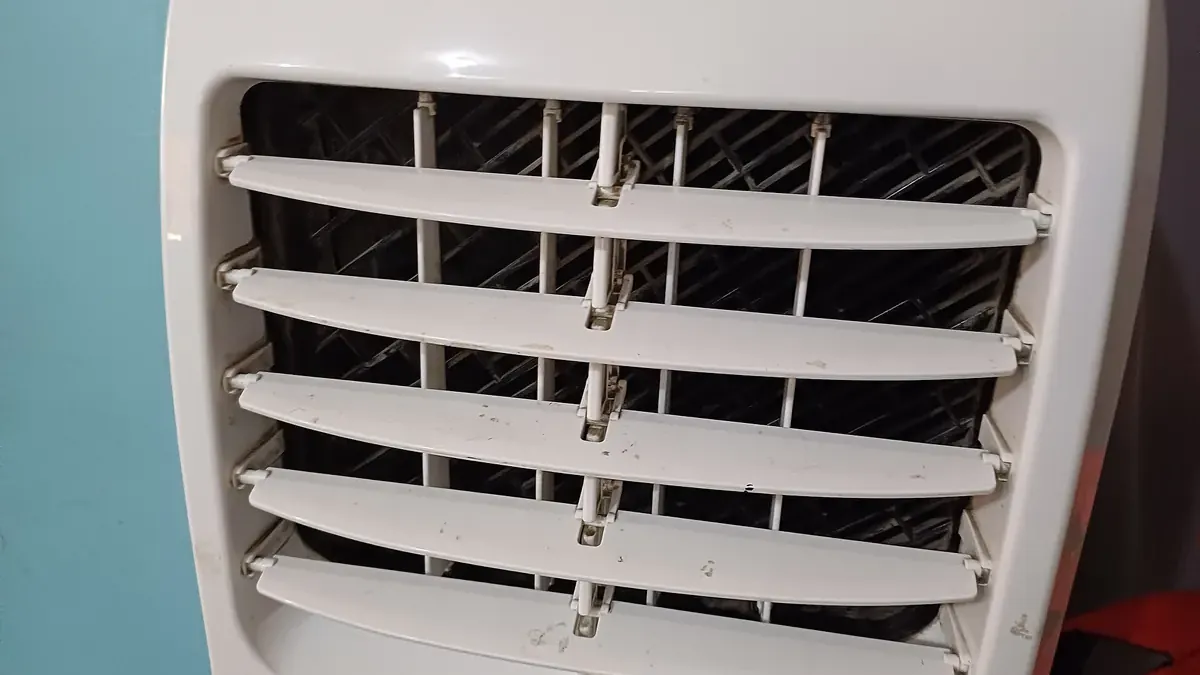
| Wall monobloc (fixed double duct) | The whole machine in one indoor casing against an outside wall, breathing through two round holes with grilles | Two core holes, usually 160 to 200 mm, and two grilles on the façade | The landlord, the building, sometimes the municipality and the heritage authority |
| Portable, single or dual hose | A machine on wheels; one hose (single duct) or two (dual duct) to the outside | Nothing permanent: a window opening, or a small hole if you want one | Nobody, unless you drill or the building rules restrict what hangs out of windows |
| Portable sealed into a window | The same portable, with a rigid panel or a fabric seal that closes the window around the hose | Nothing permanent if the seal is removable | Nobody, in most leases and buildings |
| Split with a hidden or remote condenser | A normal split whose outdoor unit sits where it cannot be seen: a roof, a courtyard, a balcony behind a screen, a private terrace | A pipe run, a wall hole of 60 to 80 mm, a position for the condenser | The landlord, the building, often the municipality |
Two points make this table more useful than it looks.
First, "no outdoor unit" is not "no façade work". A wall monobloc still needs two holes and two grilles. In most countries those are works on the building's exterior, and chapter 4 shows that the same people who refused a split can still refuse a monobloc. They refuse it less often, because two grilles are discreet, but the request must still be made.
Second, "refused" is often "refused here". Buildings and heritage officers object mainly to what is visible from the street. A split whose condenser sits on the roof, in the inner courtyard or behind a balcony screen is a different request from a box bolted to the street front, and it is the option with by far the best efficiency and the lowest indoor noise. Ask whether a hidden position is possible before giving up on a split.
The decision in six questions
- Do you rent? If yes, every fixed option needs the landlord's written consent first (chapter 5). A sealed portable needs nobody's.
- Is there any place the building could accept for a condenser (roof, courtyard, private terrace, balcony) within the pipe length the installer allows? If yes, a hidden split is worth asking for before anything else.
- Is the building listed, or in a conservation area or protected perimeter? If yes, any external change, grilles included, needs the heritage authority (chapter 4), and a portable may be the only option for this summer.
- How big is the room and how hot does it get? Eight in ten monoblocs and portables declare between about 2 and 3.5 kW of cooling (chapter 2). A large or glazed south-facing living room may need more than any of them can give.
- Is the room a bedroom, and how well do you sleep? With a monobloc or a portable the compressor is in the room. Chapter 2 gives the declared sound powers, and chapter 8 what they mean at night.
- How many summers will you stay? Fixed work pays off over years. For one or two summers in a rented flat, a well-sealed portable is often the rational choice.
Your room list (fill in)
| Room | Area (m²) | Faces (N, E, S, W) | Top floor? (yes/no) | Bedroom? (yes/no) | Window type | External wall available? (yes/no) | Any hidden condenser position? |
|---|---|---|---|---|---|---|---|
Before you go further
- I know whether I own or rent, and I have found the clause of my lease or the building's rules that deals with works, the façade or appliances.
- I know whether the building is listed or in a protected area (the town hall or the heritage register will tell you).
- I have measured the rooms and noted which ones overheat.
- I have looked for a hidden position for a condenser (roof, courtyard, terrace, balcony) and asked whether it is common property.
- I have noted the window types (tilt-and-turn, casement, sash, sliding, roof window): they decide how well a portable can be sealed.
Checkout by Stripe
Card, Apple Pay or Google Pay on Stripe’s secure page. Your card details never pass through our servers.
Instant access
Your guide opens right after payment, ready to save as a PDF. Receipt by email; “Find my purchases” resends the link.
VAT included, paid once
The price shown is the total. No subscription, nothing charged later.
Sources you can check
16 official sources cited in this guide. We install nothing and sell no equipment. Terms of sale.
Frequently asked questions
How do I receive the guide?
Right after payment you are taken to your guide page, with the spreadsheet to download. Bookmark it: the link stays valid and always shows the latest version. To keep a PDF, save it from your browser (Ctrl+P or Cmd+P, then "Save as PDF"): the layout is made for printing. Stripe emails you the receipt, and "Find my purchases" at the bottom of every page sends the link again.
Is VAT included? Is it a subscription?
€29 is the total you pay, VAT included, once. There is no subscription and nothing is charged later. Your card details go to Stripe and never reach us.
Does it cover the UK?
Yes. England and Ireland have their own sections in the rules chapter (planning, listed buildings, leases), and every other chapter applies. Wales, Scotland and Northern Ireland have their own planning rules, which the guide tells you to check; the Eurostat price table does not cover the UK, so you use the unit rate on your bill.
Do you recommend a model?
No. We sell no equipment and take no commission. The guide gives you the declared figures of every category from the EU register, shows you how to look up any model, and gives you a sheet to compare the ones you find.
What is the guarantee?
The guide is guaranteed as described: if it does not open or contains an error, we fix it, and if we cannot, we refund you in full (refund policy in the terms of sale). Write to admin@tech-bharat.com. A duplicate payment is always refunded.
Free guides on the same topic
- Air conditioning without an outdoor unit: the wall monobloc, honestly
- Permission to install air conditioning in Europe: who has to say yes
- Venting a portable air conditioner through a European window
- AC noise rules in Europe: keeping the neighbours (and the law) calm
All printable guides and packs
€29 is the total you pay, VAT included: nothing is added at checkout. Payment by Stripe; your statement shows “CLAUDE AC”. See our terms of sale, which include our refund policy. Access is immediate after payment. Claude AC is an information publisher; the guide is not legal, engineering or financial advice.